
'Emet' is Where We Begin
Prologue from my upcoming book: 'Emet: How Jews Can Reclaim Truth in an Era of Lies.'

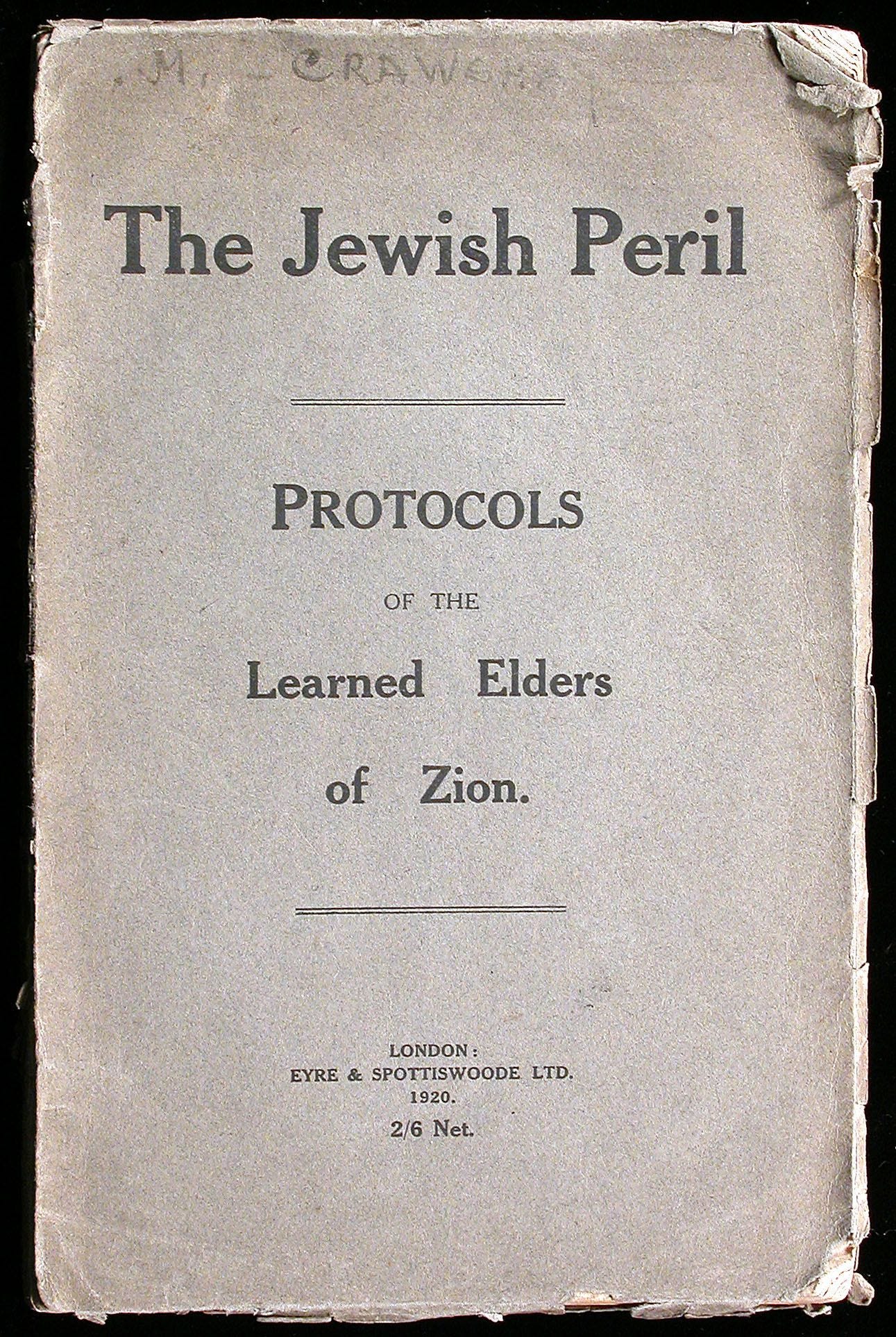
Rabbi Oppenheimer of the campus Hillel approached me as I was eating lunch at the Student Center at Wayne State University in Detroit. The year was 1984, and I had just switched my major from theater to journalism. My attempts at acting had been miserable failures. Working for the school newspaper, The South End, seemed like a way to write my own words—hopefully, true words—rather than recite lines written by somebody else.
I don’t know how the rabbi found me, or even how he knew who I was. I had never dropped by Hillel’s area of the Student Center. Somebody must have pointed me out as the guy writing pro-Israel commentaries in the student newspaper. He didn’t look like much of a rabbi to me. The scruffy-bearded man wore a Greek fisherman’s cap instead of a yarmulke.
We had never spoken before, yet Oppenheimer approached me as if we had known each other for years and were continuing an earlier conversation. He tossed a book near my lunch tray, shaking the gravy in my mashed potatoes, and hovered above me.
“Guess what I found the Muslim Students Association selling at Manoogian Hall?”
It wasn’t really a book. It was more like a pamphlet. On the cover was a strange combination of words that struck me as funny: The Protocols of the Learned Elders of Zion. I didn’t know what to make of it. There was an undertone of what I took to be Jewish sarcasm right there in the title. It seemed like the script for a new Mel Brooks movie. You know, like Jews in Space.
I looked up at the rabbi with a half-grin on my face, waiting for the punch line. Instead, there was silence. It took a couple of beats for me to realize that Oppenheimer was waiting for a reaction from me. I had nothing.
He let out a tiny sigh and sat down next to me.
“Surely you’ve heard of the Protocols,” Oppenheimer said.
My blank stare was his answer.
I grinned slightly. The name still sounded funny to me.
I could see on the rabbi’s face that he was trying to decide what to do next. In the end, he made what turned out to be the right choice for me. He was not going to give me a lecture on this book. Instead, he’d leave me with it and let me discover its bizarre contents for myself.
“I’ll leave this here with you,” said the rabbi. “Read it and then come see me at Hillel and I’ll give you a statement for your story.”
My story? I had never agreed to write a story on this. Nevertheless, I flipped the book open, and the more I read, the more curious I became. Mel Brooks indeed; it was filled with what I found to be laughable lines about One World Government under the control of International Jewry.
What I saw in the Protocols was a funhouse mirror of every distortion about Jews that I had read about or experienced in my life up to that point. And the Muslim Students Association was selling it at a campus fundraiser. Okay. I still didn’t get what the “story” was. Didn’t they have the right to sell whatever they wanted? There was something I wasn’t “getting,” something I didn’t understand.
So, the first thing I did was bring the book to my Palestinian friend, Lamya, at the school newspaper.
“You don’t know everything, Howard,” Lamya told me, her eyes rolling slightly, revealing just a hint of humor, letting me know that she was both kidding and not kidding. “You think you know a lot, but you don’t know everything,” she said.
I was nineteen years old, and there were a great many things I did not know, but Lamya was specifically referring to my lack of knowledge about Arab culture and how they think about historical and current grievances. “It doesn’t matter if the Protocols are true,” she said. “Most Arab Muslims believe they are true, so that is the reality you deal with.”
Lamya had a way of challenging me to think about things differently—not necessarily to agree with her, but she made me understand the world outside my own Jewish upbringing—what I was taught in Hebrew school and by my Holocaust-survivor relatives. It was the first time in my life I had ever dealt with the thought that truth could bend so horrifically that the lies in the Protocols were viewed as real history.
I still had no idea whether this book sale was an actual story for the school newspaper, but I was curious enough to find out. I wanted to speak to the students who believed in the Protocols. So, I set up an interview at the Muslim Students Association.
“We are Semites ourselves,” said Mohammed, the association’s president, speaking to me in a cramped office at the Student Center. “How can we be antisemitic?” Mohammed seemed a bit old to be a student. He came to Detroit from Egypt, which led to the rumor that he was also with the Muslim Brotherhood. I had no idea if that was true, but he was to become my nemesis for the next three years.
The whole “Semite” thing confused me. “Antisemitism” was simply what everybody called Jew-hatred. Frankly, I didn’t even know what a “Semite” was. I filed that question away for later. For now, Mohammed was hovering over me, gesturing wildly as I remained seated.
“You cannot deny that many of the prophecies in this book have come true,” he said. “Jews run the financial systems.”
“Prophecies,” I thought. “Prophecies.” It’s the language of religion used to describe an anti-Jewish invention from the czarist era. I cocked my head a bit like a dog. Mohammed picked up on it immediately. “Yes, prophecies.”
I walked out of that tiny Muslim Students Association office quite disoriented, but also sure I had a story. I got the quote from the rabbi, used the quotes from Mohammed, sprinkled in some background on the Protocols, and it appeared in the next day’s South End.
It was one of the first news stories I had ever written, and it changed my life, setting me on a trajectory that I am still on more than forty years later.
That encounter did not make me an expert. It made me alert.
After that, I began to notice the pattern everywhere. Lies about Jews rarely arrive as lies. They arrive as secret knowledge, historical correction, moral clarity, political analysis, or prophecy. They flatter the people who repeat them by making them feel brave enough to say what others supposedly conceal.
I would see that pattern again and again. In my family’s stories of Hungary, where lies about Jews had prepared the ground for violence and genocide. In the memories of relatives who survived the Holocaust and in my family’s involvement in the movement to free Soviet Jews. In my early childhood in Georgia, where I learned that belonging in America could be conditional. And later, as a journalist, as an editor, and eventually as someone arguing in public again when antisemitism returned with new confidence and new vocabulary.
The details changed. The structure did not.
That one story for my college newspaper set me on a path I could not escape. For the next two decades, I chased truth about Jewish life professionally, eventually becoming managing editor at the Jewish Telegraphic Agency. I was one of the Oslo peace process hopefuls, and I thought that, at JTA, I would be covering the beginning of a new era. Instead, I helped lead coverage of the failed talks between Clinton, Barak, and Arafat at Camp David—what felt like the last best chance for peace—and then watched the Second Intifada begin in their wake. That’s when something broke. What followed was disgust at the realization that truth was not enough to overcome what people needed to believe. So I walked away. For sixteen years, I stopped writing about Jewish issues entirely and covered science, technology, business, and publishing.
Then, in 2016, there was a noticeable rise in antisemitism, and I couldn’t look away anymore. When I returned, I saw the landscape differently. The old lies were back, louder and more confident than before. The Protocols hadn’t disappeared. They had simply found new platforms, new language, new respectability. What I had witnessed as a nineteen-year-old in that cramped Muslim Students Association office was a preview. And now it was everywhere.
It was a war for truth.
Well, not just truth, but the Jewish concept of Emet, which is more than the Hebrew word for truth. It is considered one of the most powerful words in the Jewish tradition because it contains the first, middle, and last letters of the Hebrew alphabet—א, מ, ת — symbolizing completeness, enduring truth, truth that encompasses everything.
I come to this concept personally. I am a descendant of the Maharal of Prague, the great sixteenth-century rabbi and mystic who, according to legend, created the Golem—a creature brought to life by the word Emet inscribed on its forehead. The Golem was meant to protect the Jewish community from those who wished to destroy it.
In one telling, the Golem was not a Frankenstein monster, but a kind of detective or even a journalist. A Christian woman’s body was discovered near the Jewish quarter during Passover, and the authorities prepared to blame the Jews, as they had done countless times before. The Golem was sent out into the night to investigate. It found the actual murderer attempting to plant evidence near Jewish homes and dragged him before the authorities, forcing the truth into the light. The blood libel collapsed. The Jews of Prague were spared—not by violence, but by the relentless, unstoppable power of truth made flesh.
That is the assumption behind the legend: that sunlight is the best disinfectant, as people in my old profession used to say. If only the truth could be dragged into public view, then the lie would collapse.
As we’ve seen, that is not the case. The Golem is a legend, and there are none coming to protect us. We have to supply the truth ourselves. But when we are anchored in Emet, we have something that lies cannot ultimately defeat. Emet has no real English translation. It is not just factual accuracy—it is truth as a state of being, as integrity, as reliability. Something foundational and unshakeable.
This book will give readers tools to confront the lies—whatever form they take, wherever they appear, however they are dressed up to look like something else. We are outnumbered in this information war. We always have been. But we still have Emet. And if we stay anchored in it, repeat it, embody it—it will hold.
In the pages that follow, I will move between memory, history, reporting, and practical argument. I will return to old lies and follow them into their newer forms: blood libels, conspiracy theories, Holocaust distortion, the denial of Jewish peoplehood, the inversion of victim and aggressor, the blacklisting of Jewish writers, and the moral confusion that followed October 7.
This is not a book about despair. It is also not a book about easy victory. Truth does not always win quickly. Sometimes it is buried, mocked, or punished. But without it, we have nothing solid enough to stand on.
Emet is where we begin.
This prologue is free to all subscribers. Subsequent excerpts from Emet will be available to paid subscribers.
Yasher Koach. Looking forward to more. Emet has always been a powerful concept to me. Didn’t know about the three Hebrew letters and its connection to completeness. Sending your blessings for insight and strength.
This is very powerful, Howard. Coming from generations of secular Jews, at least on one side of the family, my background (and knowledge) is different from yours. I look forward to reading the rest of the book.